 English











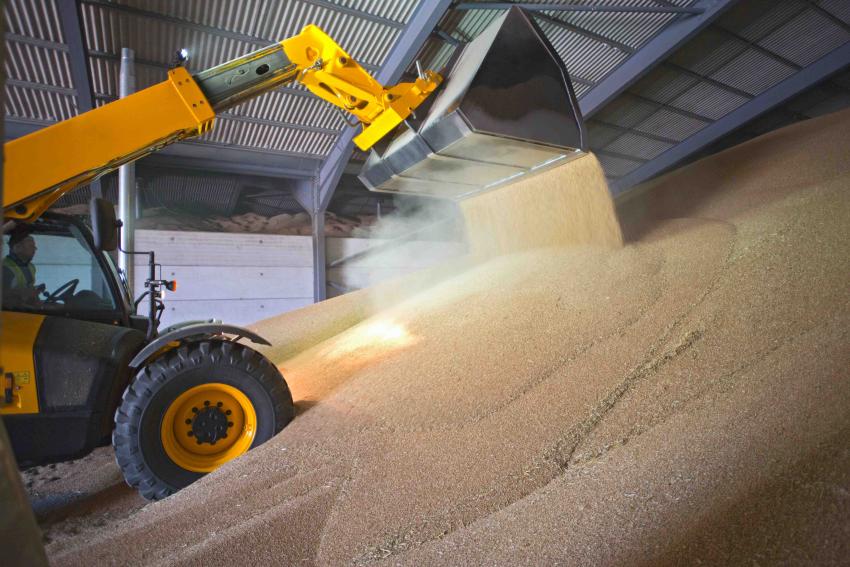
With the start of the busy new harvest season, the traffic management procedures for transporting agricultural cargo to the Port of Riga remain in effect this year as well. Jointly developed last year by the Riga City Council and the Freeport of Riga Authority these procedures are designed to facilitate movement along specific sections of city streets for agricultural freight carriers heading to the Port of Riga to deliver harvested commodities.
To take advantage of these facilitation measures, before heading to the port carriers shall register in the Port of Riga’s electronic registration system “i.rop” and obtain digital confirmation from the specific port terminal.
This solution proved its efficiency in practice last year - a smoother flow of cargo to the port terminals was provided, while significantly reducing traffic congestion on city streets and access roads leading to the port.
“The Port of Riga is a major gateway for the export of Latvian agricultural products, so our task is to make sure that during the harvest season traffic flow to the port is as efficient and predictable as possible. The system introduced last year demonstrated how smart traffic management solutions can simultaneously support both businesses and farmers while maintaining smooth mobility for Riga residents. “That is why we are sticking to this solution this year as well, as it helps strengthen the competitiveness of the Port of Riga and facilitates the seamless delivery of the new harvest for export,” said Jānis Lange, Chief Executive Officer of the City of Riga.
“We would like to thank the Riga City Council and the Freeport of Riga Authority for the provided solutions helping farmers to deliver their products to the port as quickly as possible. Such support is critical for farmers during harvest time. Latvia boasts a significant port capacity, and it definitely needs to be put to use. Still, it is clear that the capacity of grain storage facilities is insufficient to fully store all agricultural commodities harvested in Latvia - cereals, rapeseed, peas, and beans. Therefore it is very important to export a portion of this production as early as possible so that the harvesting in Latvia - which will continue throughout August and into early September - can proceed without a hitch,” emphasized Mārtiņš Trons, a Board member of the association “Zemnieku Saeima.”
“Drawing on past experience, Riga municipal institutions, the municipal police, and the Freeport of Riga jointly developed a strategy last year to mitigate the impact of agricultural freight on city traffic during the harvest season. Last year's results prove this solution works. Moving forward, we will sustain these efforts this year to ensure a seamless harvest season for both farmers and city residents,” said Andrejs Aronovs, Deputy Chief of the Riga Municipal Police.
Traffic management measures for agricultural freight carriers are in effect on the following sections of Riga’s streets:
- Akmeņu Street, from Mūkusalas Street to Valguma Street;
- Daugavgrīvas Street, from Raņķa Dambis to Lidoņu Street;
- The section of Mūkusalas Street, from Kārļa Ulmaņa Gatve to Akmeņu Street;
- Raņķa Dambis;
- Valguma Street from Akmeņu Street to Uzvaras Boulevard.
Traffic signs in these sections have been supplemented with the notation “Except for agricultural freight carriers pre-registered via i.rop,” thereby ensuring that the simplified traffic regulations apply only to carriers traveling to port terminals with agricultural cargo.
Detailed information about the “i.rop” electronic application system, as well as registration, is available on the Freeport of Riga Authority’s website here.
For additional information, please e-mail [email protected] or call 67090777 24 hours a day.
The Port of Riga is the largest hub for agricultural exports in Latvia - in 2025, 2.94 million metric tons of bulk agricultural cargo were transshipped via the port, accounting for 48% of all cargo in this segment handled at Latvian ports. Most agricultural cargo is delivered to the port by truck - last year, the number of agricultural freight carriers reached approximately 72,000 trucks. During the busiest period of the grain season, those traffic flows require specific traffic management to ensure both the seamless operation of the port’s terminals and the least possible impact on the city traffic.
Information for media

- [email protected], +371 670 308 53
- Freeport of Riga Authority
- Mihaila Tāla iela 1, Rīga, Latvija, LV-1045